Picking a
logistics company in Ontario usually comes down to price on the first call, and most shippers only find out what that decision actually bought them once their freight needs change. A load gets booked, a driver shows up late or not at all, and the company that looked fine in the sales pitch suddenly has no backup plan. That gap, between a company that just moves your freight and one that plans around your business, is the real difference between a logistics provider and a logistics partner.
The right logistics company in Ontario should offer more than one trailer type (full truckload, LTL, flatbed, and container drayage), a carrier network large enough to cover your freight during peak weeks and winter disruptions, and a dedicated point of contact who tells you about a delay before you have to ask. A provider fills whatever truck happens to be free. A partner builds a plan around your shipping patterns, your dock hours, and your growth. Ask about service scope and carrier capacity before you ask about the rate per mile.
What “Service Scope” Actually Means for a Trucking Company in Ontario
Service scope is simply the range of freight a carrier can actually handle without subcontracting it to someone else at the last minute. A lot of smaller operators are set up for one trailer type and one kind of lane, which is fine until your shipment doesn’t fit that box.
An Ontario trucking company with real service scope usually covers:
- Full truckload (FTL) for dedicated, single-shipper freight that needs to move fast and arrive undamaged.
- Less than truckload (LTL) for smaller shipments that don’t justify a full trailer.
- Flatbed for oversized, open-deck, or equipment loads that a dry van can’t handle.
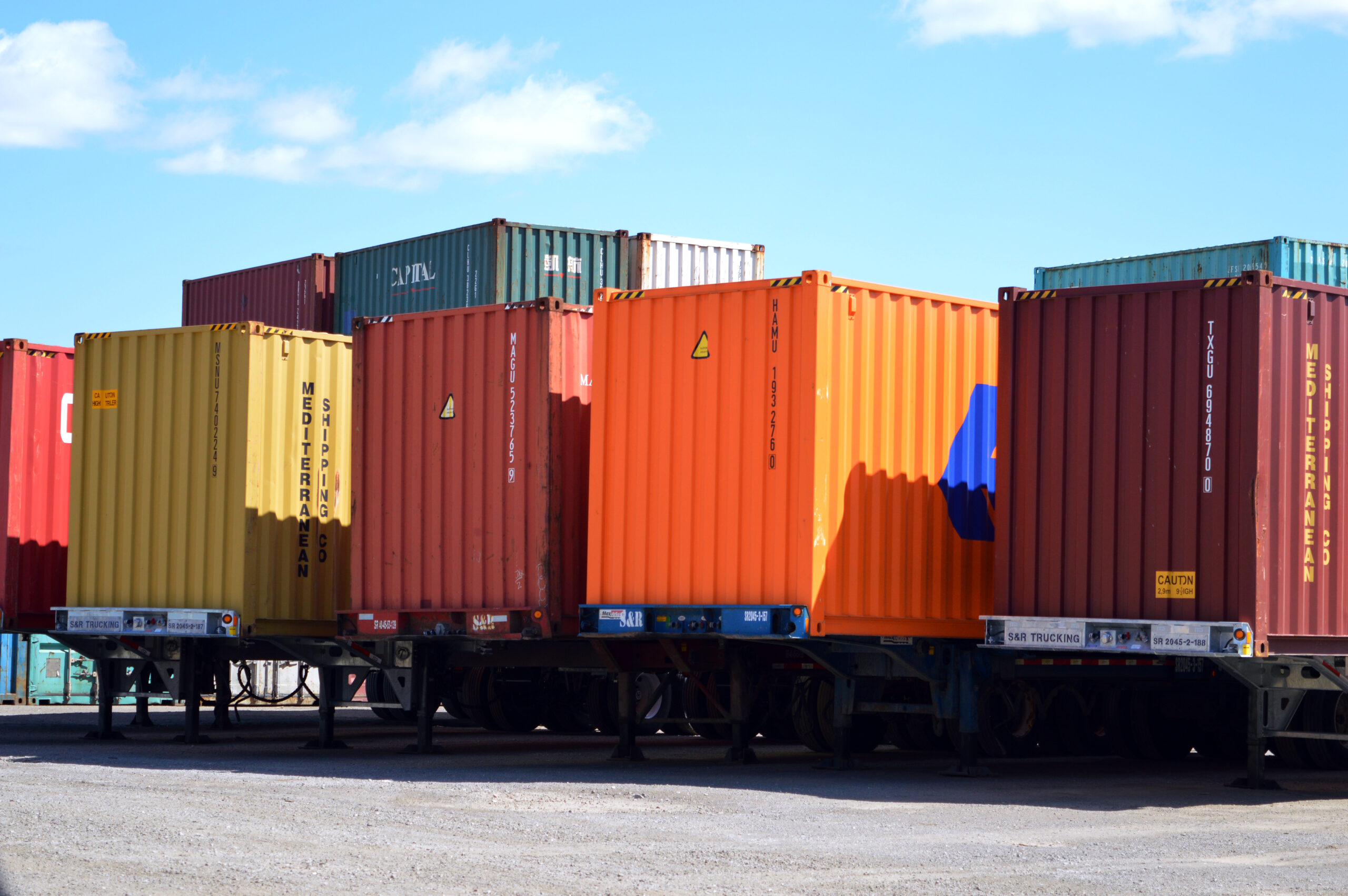
- Container drayage for freight coming off a vessel at the Port of Montreal or a Toronto-area intermodal terminal.
When one company handles all of it, your freight doesn’t bounce between three different vendors every time your shipment profile changes. That’s the practical payoff of service scope, fewer handoffs and fewer places for something to go wrong.
Why Carrier Network Size Matters More Than the Sales Pitch
Every carrier sounds capable in a first call. The real test is what happens during the second week of a cold snap, when the 401 corridor slows to a crawl and every shipper in the GTA is trying to book the same limited pool of trucks.
A carrier with a wider network, its own trailers plus a vetted pool of partner carriers, can absorb that kind of surge. A carrier running a handful of trucks with no backup can’t, and your freight sits. Before you commit, ask directly: how many trailers do you run, and what happens to my freight if three of your trucks are down for the week? A confident, specific answer is a good sign. A vague one is not.
Good to know: Ontario’s winter months are consistently the highest-risk period for capacity crunches on the 401 and Highway 400 corridors, which is exactly when carrier network depth matters most.
Provider vs. Partner: The Checklist Most Shippers Skip
Here’s the practical difference laid out side by side, because “partner” gets used as a marketing word far more often than it gets earned.
| What You’re Evaluating |
A Provider |
A Partner |
| Communication |
You call when there’s a problem |
They call you before it’s a problem |
| Service range |
One trailer type, one lane type |
FTL, LTL, flatbed, drayage, and storage under one roof |
| Peak-season capacity |
“We’ll try to find a truck” |
Network depth already planned around your busy weeks |
| Point of contact |
Different rep every call |
One dedicated contact who knows your freight |
| Pricing |
Lowest quote, unclear fees later |
Clear rate, no surprise accessorials |
The Questions to Ask Before You Sign
A ten-minute conversation before you commit saves a much longer one after your freight is late. Ask the carrier these questions directly before you sign anything:
- What trailer types and services do you run in-house, versus what you subcontract?
- How many loads can you cover for me during a peak week or a weather disruption?
- Will I have one dedicated contact, or do I call a general dispatch line every time?
- What’s your process if a truck breaks down or a driver can’t make a pickup?
- Can you handle my freight if it changes from LTL to full truckload as my volume grows?
It’s also worth checking a carrier’s compliance history yourself. Ontario publishes
Commercial Vehicle Operator’s Registration (CVOR) information through the Ministry of Transportation, which shows a carrier’s safety record and standing. A legitimate carrier won’t hesitate to have that record checked.
How Service Range Changes What You Pay and What You Risk
A narrow carrier often has to broker out whatever doesn’t fit their own fleet, which adds a markup and a second company you have no direct relationship with. If your container sits at the terminal because the brokered
drayage carrier is backed up, you’re paying demurrage and detention fees while two companies point at each other.
A carrier that runs its own
container transportation, drayage, and over-the-road capacity under one roof removes that middle layer. You get one invoice, one point of accountability, and a much shorter list of places for a delay to start.
What a Real Logistics Partner Looks Like Day to Day
In practice, a partner relationship looks almost boring, which is the point. You get a call before a delay turns into a missed delivery window, not after. Your dispatcher already knows your dock hours, your packaging quirks, and which days of the week your warehouse gets backed up.
S&R Trucking has run as part of an intermodal network out of Kleinburg, Ontario since 1992, which means the carrier relationships and GTA knowledge were built over a long stretch of winters, not a single good sales quarter. Need a straight answer on service scope or carrier capacity for your freight?
Get a quote or call 905-951-2951.
Red Flags That Signal “Provider,” Not “Partner”
- They can’t tell you how many trailers or carriers they actually run.
- They only quote the lane you asked about and go quiet on anything outside it.
- Every call reaches a different dispatcher with no shipment history on hand.
- They can’t explain what happens to your freight during a capacity crunch.
- Pricing is the only thing they want to talk about on the first call.
Frequently Asked Questions
What should I look for when choosing a logistics company in Ontario?
Look at service scope (can they run FTL, LTL, flatbed, and drayage), carrier network size, how they communicate during disruptions, and whether you get one dedicated contact. Price matters, but it shouldn’t be the first question.
What’s the real difference between a logistics provider and a logistics partner?
A provider moves the freight you book and little else. A partner plans around your shipping patterns, flags problems before they cost you money, and can flex across trailer types as your business changes.
How do I check if an Ontario trucking company is safety-compliant?
You can review a carrier’s Commercial Vehicle Operator’s Registration (CVOR) standing through Ontario’s Ministry of Transportation, which tracks safety and compliance history for carriers operating in the province.
How big should a carrier’s network be?
Large enough to absorb a peak week or a weather disruption without leaving your freight unassigned. Ask the carrier directly how they handle a surge, and expect a specific answer, not a general reassurance.
Does a logistics company need to handle more than one type of freight?
Not every shipper needs every service, but a carrier with FTL, LTL, flatbed, and drayage under one roof can absorb changes in your shipment profile without adding a second vendor and a second markup.
What happens if my regular carrier can’t cover a load during peak season?
With a provider, you’re often left sourcing a replacement truck yourself. With a partner, that capacity gap should already be planned for through their wider carrier network.
Key Takeaways
- Choosing a logistics company in Ontario should start with service scope and carrier network size, not just the quoted rate.
- A provider fills available trucks; a partner plans around your shipping patterns and dock schedule.
- Service scope that covers FTL, LTL, flatbed, and drayage reduces handoffs and vendor markups.
- Carrier network depth matters most during Ontario’s peak season and winter disruptions on the 401 corridor.
- Ask directly how many trailers and carriers a company runs, and what their plan is during a capacity crunch.
- Ontario’s CVOR system lets shippers check a carrier’s safety and compliance record before signing.
- One dedicated point of contact, instead of a general dispatch line, is a reliable sign of a true logistics partner.
- A narrow carrier that brokers out freight adds cost and accountability gaps, especially around drayage and demurrage.
S&R Trucking TeamSince 1992, S&R Trucking has been one of Ontario's leading intermodal carriers, combining FTL, LTL, drayage, flatbed and secure storage with 24/7 dispatch across Canada and North America.
Ready to Move Your Freight?
Talk to a real dispatcher today and get a free, no-obligation quote for your next shipment.
REQUEST A FREE QUOTES&R Trucking TeamSince 1992, S&R Trucking has been one of Ontario's leading intermodal carriers, combining FTL, LTL, drayage, flatbed and secure storage with 24/7 dispatch across Canada and North America.
Ready to Move Your Freight?
Talk to a real dispatcher today and get a free, no-obligation quote for your next shipment.
REQUEST A FREE QUOTE
 October 30, 2026 - By : S&R Trucking Team

Leave a comment