
Since 1992
Intermodal expertise
CN & CP Daily
Brampton & Vaughan terminals
24/7 Dispatch
Round-the-clock support
Cross-Border
Canada & USA coverage
Intermodal expertise
Brampton & Vaughan terminals
Round-the-clock support
Canada & USA coverage
Quick Answer: Intermodal transportation is container transport that combines rail and truck: a drayage truck moves the container to a rail ramp, the railway carries it the long-haul distance, and a second drayage move delivers it to its final destination. S&R Trucking provides intermodal container transportation across Ontario, coordinating rail and drayage as one service so your container transport moves on a predictable schedule from origin to final delivery.
Intermodal transportation combines the efficiency of rail with the flexibility of trucking, allowing freight to move long distances in containers without being handled or repacked. S&R Trucking provides intermodal coordination across Ontario, ensuring your containers transition smoothly between rail ramps, ports, and final destinations.
With over 30 years of experience in container logistics, we specialize in intermodal freight that requires precise timing, secure handling, and dependable drayage support.
Intermodal transportation uses multiple modes (typically rail + truck) to move containerized freight efficiently across long distances.
Key advantages of intermodal shipping:
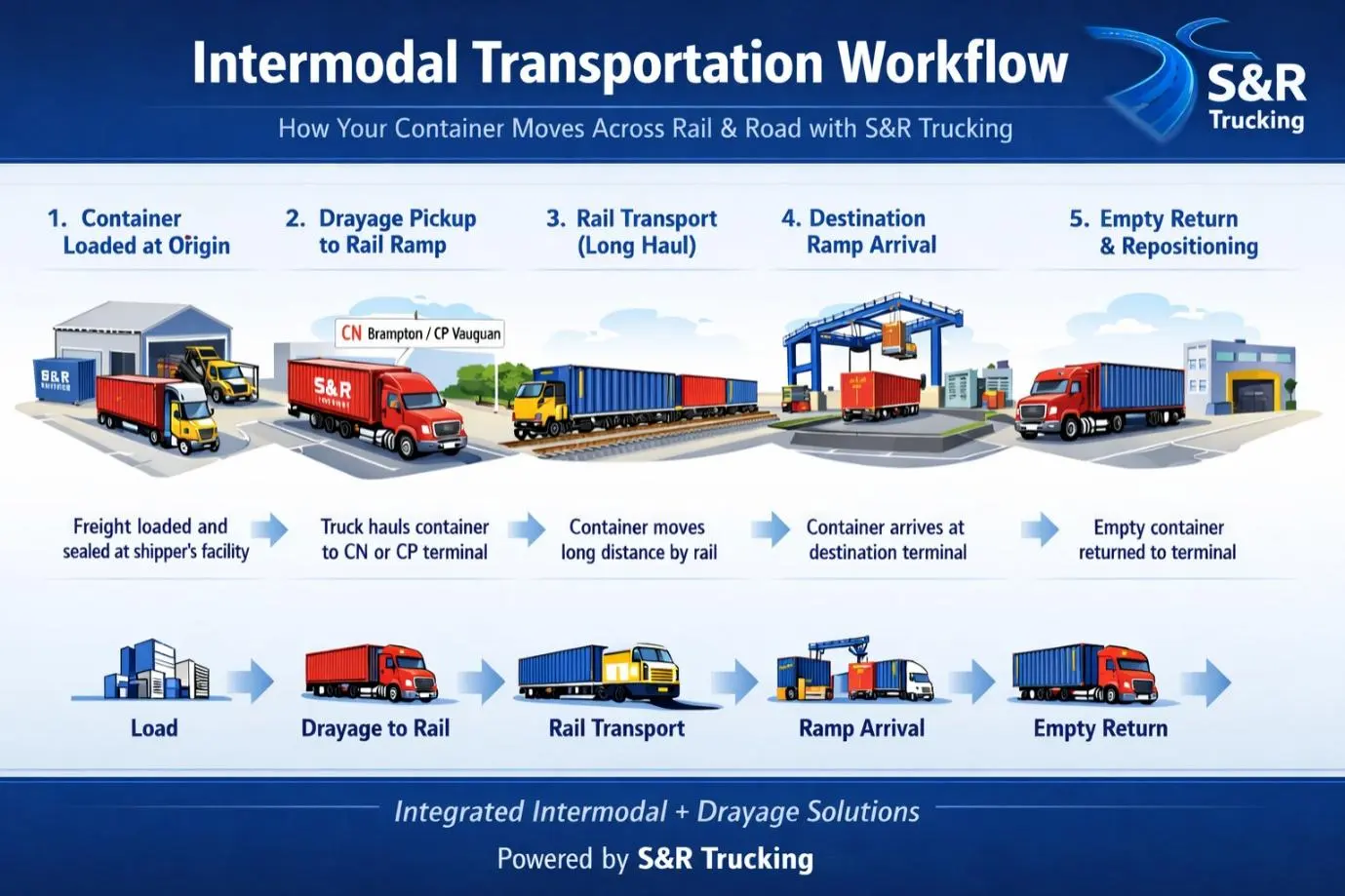
Every intermodal shipment follows the same five-step pattern from origin to final delivery.
Freight loaded into a standardized shipping container at the shipper's warehouse.
Truck moves the container to the nearest intermodal rail ramp.
Container travels long-distance by rail — the most fuel-efficient leg.
Truck picks up the container at the destination rail terminal.
Container arrives at the consignee's warehouse or customer dock.
This two-drayage-plus-rail pattern is what separates intermodal container transport from straight trucking. S&R Transportation coordinates every handoff — from container pickup to rail cut-off to final delivery.
Intermodal is one of the most efficient ways to move freight across Canada and the U.S. It reduces cost, improves reliability, and minimizes handling risks.
Intermodal matters because it:
For businesses shipping across provinces or cross-border, intermodal is often the most strategic choice.
If your container is already at a Toronto-area terminal and only needs to move a short distance to your warehouse, that’s a straight drayage move. Intermodal comes into play when the container needs to cover real distance first, rail for the long-haul leg, with drayage handling the short pickup and delivery on each end. If you’re moving containers long-haul across Canada without the rail leg, our Container Transportation page covers straight trucking options instead.
| Feature | Intermodal | Drayage-Only | Straight Trucking |
|---|---|---|---|
| Distance | Long-haul (rail + drayage) | Short (terminal to dock) | Any distance (truck only) |
| Modes | Rail + truck | Truck only | Truck only |
| Cost | Lower for long-haul | Per-move rate | Higher for long-haul |
| Best For | Cross-country containers | Local container pickup/delivery | Direct, time-sensitive loads |
| S&R Page | This page | Drayage | Container Transportation |
We operate daily at Ontario’s busiest rail terminals:
Our familiarity with CN and CP processes ensures your containers move without delays, bottlenecks, or missed cut-offs.
The intermodal terminal (like CN Brampton or CP Vaughan) where containers transfer between rail cars and drayage trucks.
The deadline by which a container must arrive at the rail ramp to make a scheduled train; missing it pushes the container to the next available departure.
The wheeled frame a container sits on for the road portion of an intermodal move; availability at the ramp can affect pickup timing.
Demurrage is the fee for a container sitting at the rail ramp past its free time. Detention is the equivalent fee for holding the trucking chassis too long.
We coordinate the entire container journey:
Benefits of integrated intermodal + drayage:
Your freight stays on schedule from origin to final delivery.
Many shippers struggle with intermodal delays and coordination gaps. S&R eliminates these pain points with proactive dispatch and terminal expertise.
We pre-plan every move against CN/CP schedules and confirm cut-off windows 24 hours in advance.
24/7 dispatch and GPS-tracked drivers ensure on-time container retrieval from every terminal.
Dedicated account reps with real-time status updates — no chasing emails or waiting on hold.
Our fleet includes company-owned chassis, so we never depend on terminal pool availability.
We prioritize same-day empty returns to avoid demurrage charges and keep your containers cycling.
Reefer-ready intermodal options with pre-trip inspections and continuous temperature monitoring.
We know peak hours at Brampton and Vaughan terminals and schedule around them to avoid wait times.
Intermodal transit times depend on several factors:
For an accurate timeline, send us your origin, destination, and container-ready date and we’ll map the specific route.
S&R Trucking maintains a valid CVOR (Commercial Vehicle Operator’s Registration), the legal safety credential required to run commercial freight in Ontario.
Our intermodal solutions serve a wide range of industries:
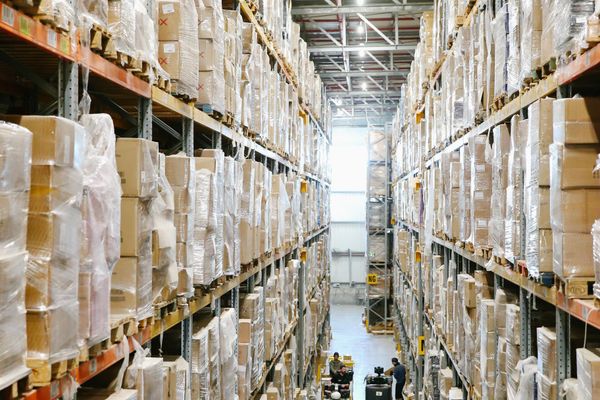
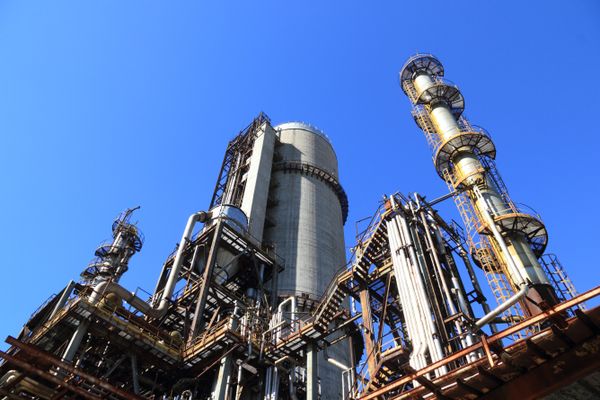


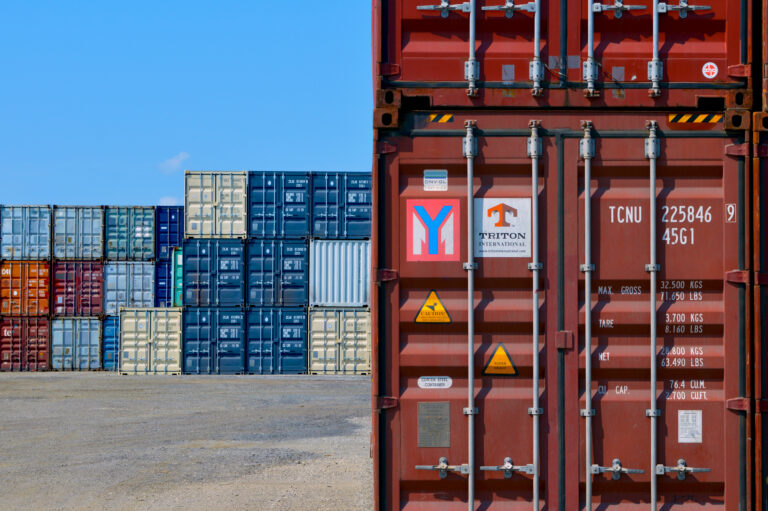
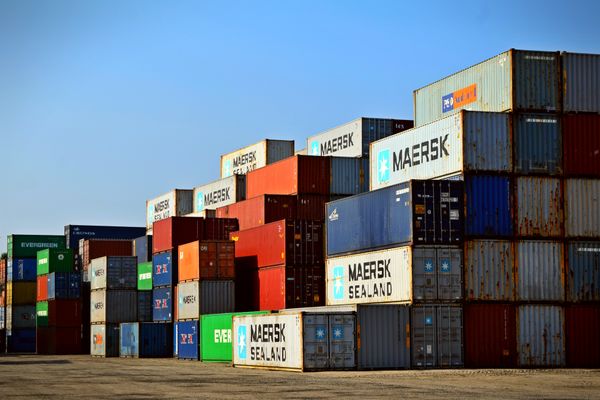
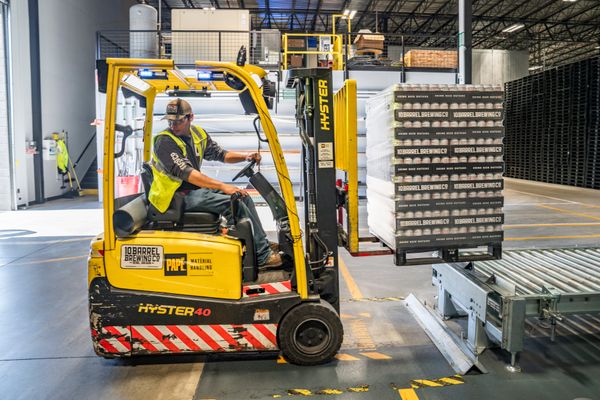
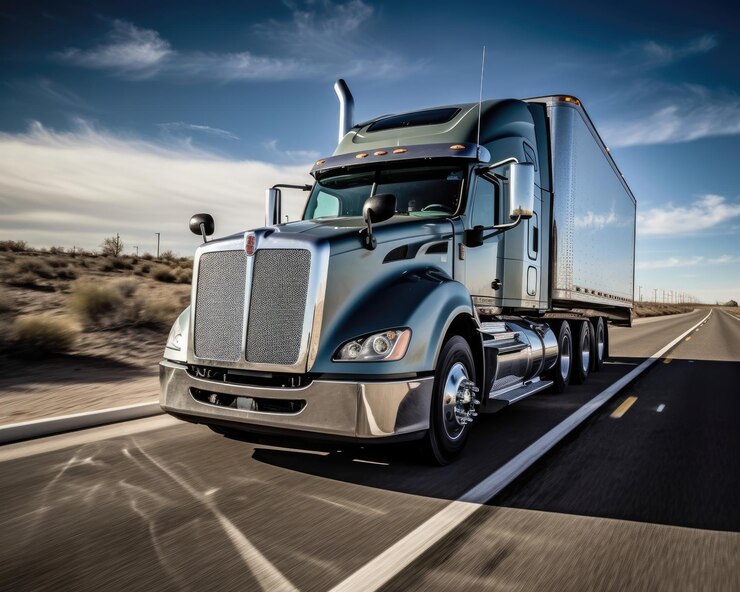
If your business relies on container movement, intermodal is often the most efficient solution.
We provide intermodal services across the Greater Toronto Area, Southern Ontario, and cross-border:
Daily intermodal operations at CN Brampton and CP Vaughan terminals with in-house drayage coordination.
Toronto, Mississauga, Brampton, Vaughan, Markham, Richmond Hill, Pickering, Ajax, Whitby, and Oshawa.
Hamilton, Niagara Falls, Kitchener, London, Windsor, Ottawa, Kingston, and cross-border to Michigan, New York, Ohio, and the US Midwest.
Quick answers to common questions about intermodal, drayage, container handling, and delivery timelines.
Drayage-only is a single short trucking move, typically a container already sitting at a nearby terminal going to your dock. A full intermodal move adds the rail leg in the middle, so you get drayage on both ends with rail covering the long-haul distance between them.
The cut-off is the deadline for a container to arrive at the rail ramp to make its scheduled train. Miss it, even by a few hours, and the container waits for the next available departure, which can add a full day or more to your delivery.
Yes, chassis availability at the ramp is one of the variables we manage directly as part of coordinating the pickup, so you’re not left arranging a separate chassis provider.
Book as early as you can once you have a container-ready date. Rail cut-off schedules and chassis availability get tighter closer to the date, and earlier booking gives us more flexibility to hit the cut-off you need.
Yes, temperature-controlled container moves are part of our standard intermodal coordination, and we apply the same secure handling standards to high-value freight across both the rail and drayage legs.
We monitor the ramp schedule and communicate immediately if a cut-off is at risk, and if a container does get held, we coordinate the next available slot and keep you updated rather than leaving it to sit.
Yes, empty return and repositioning for the next load is part of our standard intermodal + drayage service, so you’re not managing that leg separately.
Explore more of S&R Trucking’s Ontario freight and transportation services:
Get a free intermodal quote from S&R Trucking. Reliable rail + drayage container transport across Ontario and North America.
Fill out the form below and our team will get back to you shortly.