You have six pallets of product to move, a full trailer would leave most of the space empty, and a carrier tells you the cheaper option is LTL. If you have ever asked yourself what is LTL shipping and whether it will really save money, you are asking the right question before booking, not after.
What is LTL shipping? LTL, short for less than truckload, is a freight service where your shipment shares trailer space with freight from other shippers and you pay only for the space and weight you use. It costs less than a dedicated truck for smaller loads, but your freight is usually handled at terminals along the way, so it often takes longer and carries more handling risk.
What Is LTL Shipping and Who Is It For?
LTL, or less than truckload shipping, fills the gap between a parcel courier and a full trailer. If your freight is too heavy or too bulky for parcel service, yet too small to justify a whole truck, LTL is built for you. Typical LTL freight is a few pallets, crated equipment, or boxed inventory heading to a dock.
The carrier collects freight from several shippers, combines it into one trailer, and delivers each shipment to its own destination. You split the cost of the truck with the other shippers on it. That is why what is LTL shipping often gets answered with one word, shared.
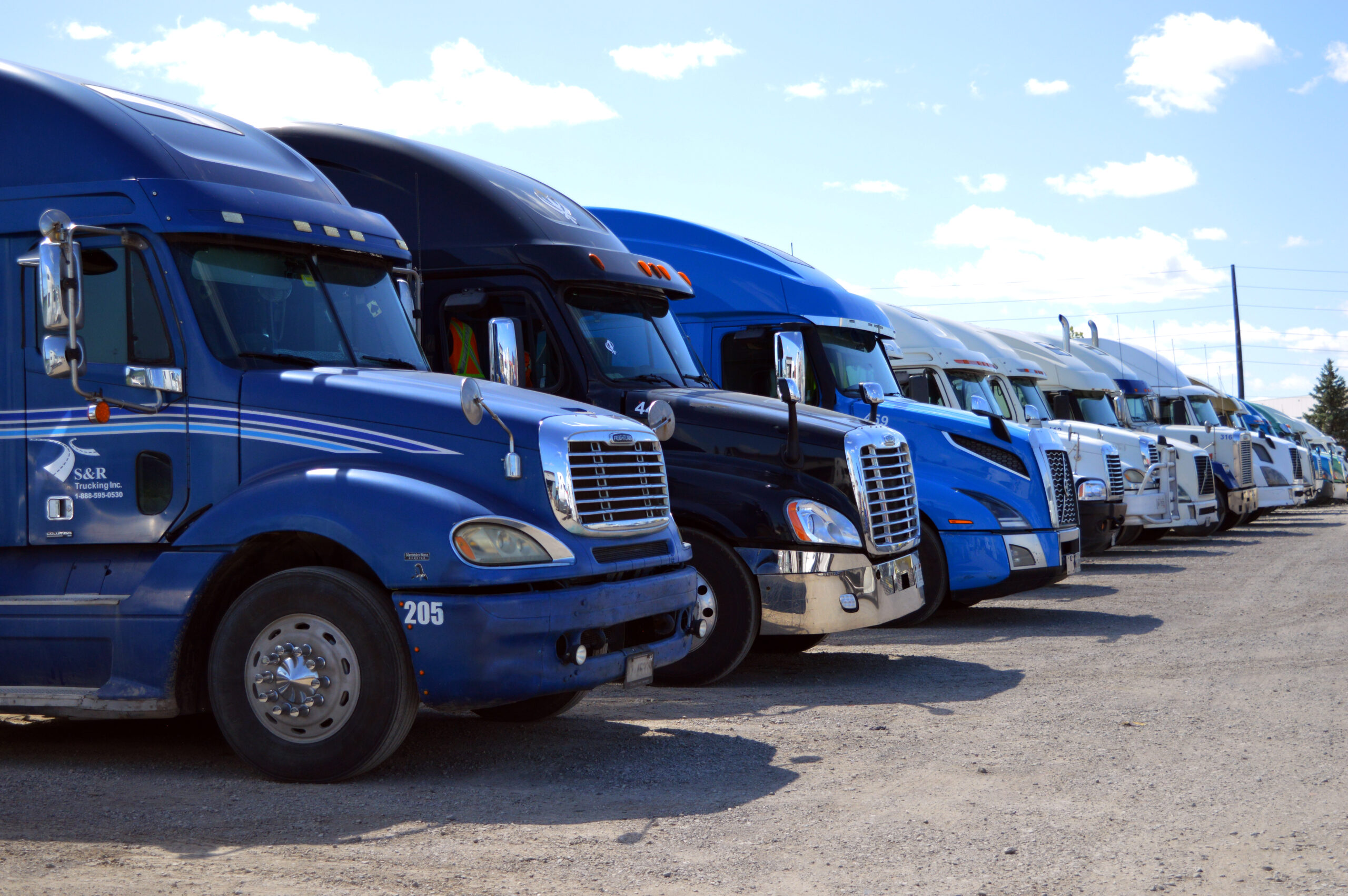
S&R Trucking Inc offers
LTL services from Kleinburg, Ontario, alongside full truckload, partial load, flatbed, and container work, so each shipment gets the right mode.
What Is LTL Shipping Like in Practice, Step by Step?
Understanding what is LTL shipping in practice means following one shipment from your dock to the receiver. Most LTL moves follow the same path.
- Pickup. A driver collects your freight at your dock and checks it against the bill of lading.
- Origin terminal. The freight is unloaded, sorted by destination, and staged with other shipments heading the same way.
- Line haul. Freight from many shippers is loaded onto one trailer and driven to a destination terminal, sometimes with a transfer in between.
- Destination terminal. The trailer is unloaded and each shipment is sorted for local delivery.
- Final delivery. A local truck takes your freight to the receiver, usually within an appointment window.
Each of those stops is a handoff, and handoffs are where time and damage risk come from. A direct full truckload skips most of them. That trade-off sits at the heart of every LTL decision.
Where Do LTL Terminal Delays Happen?
Shippers who ask what is LTL shipping usually hear about savings first. The delays deserve equal attention, because they explain most of the complaints.
Delays tend to cluster at three points. The first is the origin terminal, where freight waits for enough volume to fill a trailer on that lane. The second is any transfer between terminals, where a missed connection can add a full day. The third is final delivery, where a receiver’s limited appointment window can push a shipment to the next route.
Good to know: LTL transit times are estimates built around terminal schedules, so a shipment is rarely tracked as a single continuous trip the way a dedicated truck is.
For a closer look at how timing and cost change across provinces, see our guide to
LTL shipping in Canada.
What Is LTL Shipping Priced On?
LTL freight pricing is built around the space and weight your shipment takes up on a shared trailer. A carrier looks at a handful of inputs, and knowing them helps you read a quote.
- Weight: heavier shipments cost more, though the rate per kilogram usually falls as weight rises.
- Dimensions and density: a light but bulky shipment can cost as much as a heavy compact one because it uses more trailer space.
- Distance and lane: longer or less common lanes cost more.
- Freight type: fragile, stackable, or hard-to-handle freight can change the price.
- Accessorial services: liftgate delivery, residential delivery, or appointment scheduling are usually charged on top.
The most common surprise is a reweigh or remeasure. If the weight or size on your bill of lading does not match what the carrier measures at the terminal, the invoice changes. Accurate paperwork is the cheapest way to avoid it.
LTL vs Full Truckload: Which Fits Your Load?
The cheaper rate is not always the cheaper outcome. Use this comparison as a starting point.
| Factor |
LTL |
Full truckload (FTL) |
| Trailer use |
Shared with other shippers |
Dedicated to your freight |
| Typical load size |
A few pallets up to a partial trailer |
A full trailer or freight that cannot share |
| Handling |
Multiple terminal handoffs |
Loaded once, unloaded at the destination |
| Transit time |
Often longer, tied to terminal schedules |
Usually direct and faster |
| Cost basis |
Pay for the space and weight used |
Pay for the whole truck |
| Damage exposure |
Higher, more handling |
Lower, less handling |
If your freight is fragile, urgent, or close to filling a trailer, our
full truckload services may cost less overall once delays and claims are counted. If your load sits between the two,
partial load solutions let you use part of a trailer without sharing it with a long list of other shippers.
How Can You Cut LTL Delays and Damage?
You cannot control the terminal, but you can control what arrives there. These habits protect your freight with any LTL carrier.
- Package for handling. Use sturdy pallets, stretch wrap, and corner protection, and mark fragile freight clearly.
- Weigh and measure accurately before you book, and match the paperwork to the freight.
- Ship early in the week so a missed connection does not push delivery into a weekend.
- Confirm the receiver’s hours and any special delivery needs before the truck leaves.
- Photograph the freight at pickup and note any damage on the delivery receipt right away.
Carriers also operate under federal and provincial rules.
Transport Canada’s road transportation pages outline the national framework for commercial road transport, useful if you are new to shipping in Canada.
Is LTL Right for You? What Is LTL Shipping Best Used For?
Anyone asking what is LTL shipping best for should know it fits when your shipment is small, your delivery date has some flexibility, and your freight is sturdy and well packed. LTL transportation is a strong match for regular replenishment shipments, wholesale orders, and supplies moving between a warehouse and a customer.
It fits less well for high-value or fragile freight, tight delivery deadlines, or loads that are close to a full trailer. In those cases the cost savings can be erased by delays, damage claims, or a rushed rebooking.
If you are not sure which side of the line your load falls on, ask a carrier to quote both modes for the same lane and compare the total outcome, not just the rate. We are glad to do that for you.
Need help deciding what is LTL shipping worth for your freight? Call S&R Trucking at 905-951-2951 or
request a quote and we will quote our LTL services against the alternatives.
Key Takeaways
- What is LTL shipping? It is freight moved on a shared trailer, with you paying for the space and weight your shipment uses.
- LTL freight suits a few pallets or loads too large for parcel service and too small for a full truck.
- Freight passes through origin and destination terminals, and each handoff adds time and handling risk.
- Terminal waits, missed transfers, and receiver appointment windows cause most LTL delays.
- Less than truckload pricing depends on weight, dimensions, density, lane, and accessorial services.
- Inaccurate weight or size on the bill of lading leads to reweigh and remeasure charges.
- Fragile, urgent, or near-full loads often do better on full truckload or partial load service.
- S&R Trucking quotes LTL against other modes at 905-951-2951.
Frequently Asked Questions
What is LTL shipping in simple terms?
LTL means less than truckload. Your freight shares a trailer with other shippers’ freight, and you pay only for the space and weight you use. It is a middle option between parcel service and a dedicated full truck.
How many pallets count as an LTL shipment, and what is LTL shipping not suited for?
There is no single cutoff, but LTL typically covers a single pallet up to several pallets. Once a shipment starts to fill a large part of a trailer, a partial load or full truckload quote is worth comparing.
Why does less than truckload take longer than full truckload?
LTL freight passes through terminals where it is unloaded, sorted, and reloaded, and trailers leave on schedules built around volume. A full truckload usually goes straight from pickup to delivery.
Is LTL shipping more likely to damage freight?
The extra handling in LTL transportation does raise the risk compared with a dedicated truck. Good packaging, clear labels, and accurate paperwork lower it, and noting any damage on the delivery receipt protects your claim.
How do I choose between LTL and full truckload?
Compare the size, value, and urgency of your freight. Small, sturdy, flexible loads suit LTL, while fragile, time-sensitive, or nearly full loads often suit full truckload. Ask your LTL carrier to quote both for the same lane.
S&R Trucking TeamSince 1992, S&R Trucking has been one of Ontario's leading intermodal carriers, combining FTL, LTL, drayage, flatbed and secure storage with 24/7 dispatch across Canada and North America.
Ready to Move Your Freight?
Talk to a real dispatcher today and get a free, no-obligation quote for your next shipment.
REQUEST A FREE QUOTES&R Trucking TeamSince 1992, S&R Trucking has been one of Ontario's leading intermodal carriers, combining FTL, LTL, drayage, flatbed and secure storage with 24/7 dispatch across Canada and North America.
Ready to Move Your Freight?
Talk to a real dispatcher today and get a free, no-obligation quote for your next shipment.
REQUEST A FREE QUOTE
 November 5, 2026 - By : S&R Trucking Team

Leave a comment