Booking a shipping container moving service sounds straightforward until you realize a loaded 40-foot container can weigh close to 30,000 kilograms, needs a chassis truck fitted with ISO twist locks, and may require an Ontario MTO permit before it touches a provincial highway. Whether your container is coming off a terminal in Brampton or sitting in a yard near the 400 corridor, getting it safely to your facility takes the right equipment, the right carrier, and a bit of coordination before the truck shows up.
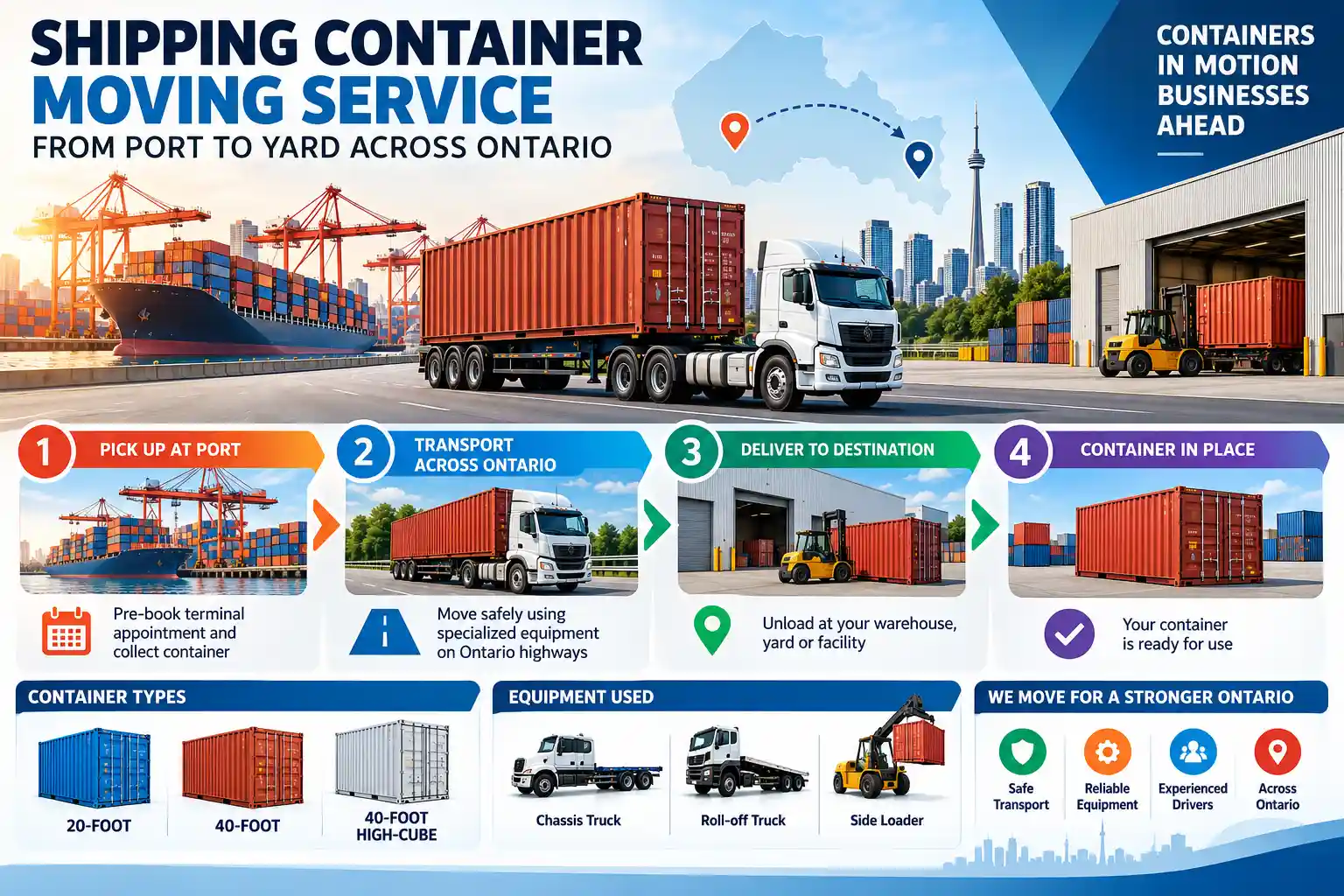
A shipping container moving service transports ISO containers, 20-foot, 40-foot, or 40-foot high-cube, between a port terminal, storage yard, or intermodal hub and a warehouse, distribution centre, or final destination. The carrier uses a chassis truck or roll-off to move the container over Ontario roads, and a permit may be required if the loaded weight exceeds provincial axle limits. Port terminal pickups require a pre-booked gate appointment, while yard-to-yard moves depend on confirmed lifting equipment at both ends.
Key Takeaways
- Container types. A shipping container moving service handles 20-ft and 40-ft ISO containers, loaded or empty, on road chassis or roll-off trucks.
- Weight matters. A fully loaded 40-ft container can carry close to 28,000 kg of cargo; combined with the truck and chassis, Ontario axle weight limits often require an MTO Special Vehicle Configuration permit.
- Two move types. Port terminal pickups (drayage) and yard-to-yard transfers each require different equipment, booking processes, and access arrangements.
- Chassis is not optional. Moving a loaded container on a standard flatbed without ISO twist locks is a securement failure. Always confirm the carrier uses a proper container chassis.
- Empty returns have rules. Returning an empty container to a terminal requires an Empty Return Authorization; your carrier should manage the booking on your behalf.
- Terminal appointments are mandatory. Ontario intermodal terminals require pre-booked pickup windows; missing the slot usually means returning empty-handed and starting the booking over.
- S&R Trucking handles it. S&R Trucking’s container transportation service covers port pickups, direct yard moves, and repositioning runs across Ontario.
What a Shipping Container Moving Service Does
A container moving service is a specialized segment of freight transport focused on relocating ISO shipping containers between locations. Unlike general freight, containers have standardized dimensions and corner castings that require specific handling equipment; a standard box truck or general-purpose flatbed is not the right tool. The service covers loaded containers with cargo inside, empty containers being repositioned to a depot or terminal, and containers moving from an intermodal rail yard to a final delivery point.
For Ontario importers and distributors, container moves typically fall into one of two situations: picking up an inbound ocean container from a port terminal or inland terminal, or moving an on-site container from a storage yard to a new location. Both require a carrier experienced with container-specific equipment and the scheduling demands of terminal operations. S&R Trucking’s container transportation service handles both, with drivers familiar with GTA terminal gate procedures and Ontario highway requirements.
Loaded vs Empty: Why the Type of Container Changes the Move
A loaded container and an empty container are very different propositions on the road. A loaded 40-foot ISO container can hold anywhere from 10,000 to 28,000 kilograms of cargo, and that weight determines whether an Ontario MTO permit is required before the truck moves. The truck, chassis, and load combination is assessed against provincial axle group limits, and anything that pushes past the legal threshold needs a Special Vehicle Configuration permit filed in advance.
Empty containers are lighter but still need proper handling. A standard steel 40-foot container weighs roughly 4,000 kg on its own, which is workable for a roll-off or tilt-deck truck. Empty container returns to terminals or shipping line depots also involve booking an Empty Return Authorization with the shipping line, confirming which terminal or depot will accept the box, and arriving within the approved window. A good shipping container moving service provider manages that coordination as part of the job.
Good to know: ISO shipping containers use corner castings and twist locks for securement. A container placed on a standard flatbed without a chassis frame and twist locks is not properly secured under Transport Canada cargo securement regulations. Always ask your carrier what chassis and securement equipment they use before booking.
Port Pickup vs Yard-to-Yard: The Two Main Container Move Types
Port Terminal Pickup
When your ocean container clears customs and is released from a terminal, such as GCT Brampton, the CN Brampton Intermodal Terminal, or the CP intermodal hub, picking it up requires a gate appointment. Ontario’s major intermodal terminals run appointment booking systems, and the driver needs a valid trucker number, a booking reference, and a copy of the container release before arriving at the gate. Missing the appointment window usually means losing the slot and waiting for another.
This type of move is called
drayage, and it is the first inland leg of your container’s journey. S&R Trucking handles drayage pickups from Toronto-area intermodal terminals and coordinates directly with the terminal on appointment slots, container release status, and chassis availability. If your container has a hold or a customs flag, it cannot be picked up until those are resolved. Confirm the release status before dispatching the truck.
Yard-to-Yard Container Transfer
Yard-to-yard moves are direct transfers between two non-terminal locations: from a customer’s facility to a storage yard, between two distribution sites, or from a construction laydown to a permanent dock. These moves skip the terminal gate appointment process, but they do require lifting equipment at both origin and destination. If neither location has a side loader, crane, or dock-height access to slide the container off, the move cannot proceed safely.
For Ontario businesses that store containers on-site, a yard-to-yard move is often how they reposition units after a job, moving a storage container off a construction site back to a yard, or shifting a reefer unit between seasonal locations. S&R Trucking can advise on whether your origin and destination have the access needed, and what equipment should be arranged before the truck arrives.
Equipment Used to Move Shipping Containers in Ontario
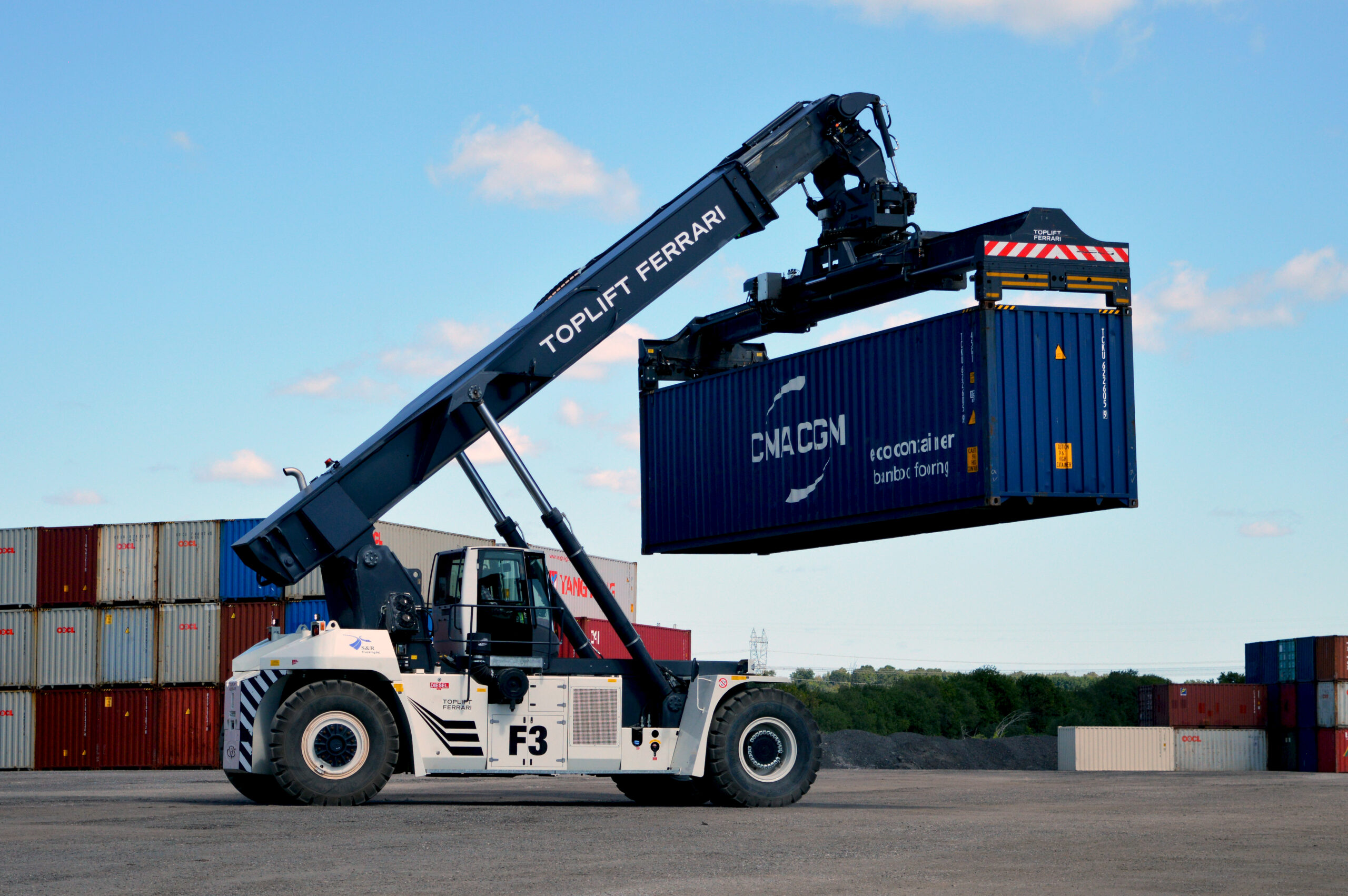
Not every truck can handle a shipping container. The equipment depends on whether the container is loaded or empty, whether lifting is needed at origin or destination, and how far it is travelling.
| Equipment Type |
Best Used For |
Load Capacity |
| Chassis truck (container chassis) |
Loaded 20-ft and 40-ft road transport between terminals and warehouses |
Up to 30,480 kg cargo |
| Roll-off / tilt-deck truck |
Empty containers, short-haul repositioning, site-to-site moves |
Up to 25,000 kg |
| Flatbed with ISO twist locks |
Loaded containers where dock access is limited; longer haul moves |
20-ft and 40-ft ISO |
| Side loader / reach stacker (at yard) |
Loading and unloading at intermodal yards and storage sites |
20-ft and 40-ft ISO |
How to Book a Shipping Container Moving Service: A Step-by-Step Guide
Booking a container move is more structured than a standard freight pickup. Following these steps prevents the most common delays and extra costs.
- Confirm your container details. Confirm your container’s size (20-ft, 40-ft, 40-ft high-cube), whether it is loaded or empty, and the full weight including cargo. This determines what equipment the carrier needs and whether an Ontario weight permit is required before the move.
- Provide origin and destination details. Tell your carrier exactly where the container is and where it is going: terminal name, yard address, facility hours, and any dock or access restrictions. For terminal pickups, confirm whether the container has customs clearance and a terminal release already issued.
- Confirm equipment at both ends. Verify the carrier has the right chassis for your container size and that lifting equipment or dock access exists at both the pickup and delivery points. A mismatch here causes the whole job to stall.
- Check Ontario weight permit requirements. If the loaded container plus truck and chassis will exceed Ontario axle weight limits, the carrier needs to file a Special Vehicle Configuration permit with the MTO before the move. Allow 2 to 5 business days for permit processing in non-urgent situations.
- Book your terminal appointment. For port terminal or intermodal hub pickups, book a gate appointment through the terminal’s system. Bring the booking reference, trucker registration number, and container release documentation. Missing the appointment window usually means starting the booking process over.
- Arrange unloading at the destination. Before the truck arrives at the destination, confirm the unloading crew and equipment are ready. A container left sitting on the chassis because unloading equipment is unavailable creates a detention charge and delays your next shipment.
What Can Go Wrong, and How Good Planning Prevents It
Most container move problems come down to three things: wrong equipment, missed appointments, and no unloading plan at the destination.
- Equipment mismatch: Moving a loaded container on a standard flatbed without a container chassis is a common mistake on yard-to-yard moves. Without ISO twist locks engaging the container’s corner castings, the container is not properly secured. A properly equipped carrier will not let this happen, but when sourcing a carrier quickly, always confirm the chassis type before booking.
- Missed gate appointments: Terminal gate appointments are time-specific. If your driver arrives late, the slot is lost and the terminal may not have another available for hours or days. Your carrier should monitor appointment status and build in lead time for traffic on the 401 or 400 corridor.
- No unloading capability at delivery: If your facility does not have a side loader or a dock that accepts containers, the driver has nowhere to drop the box. Confirm unloading arrangements before booking, not after the truck is already parked in your yard.
S&R Trucking’s container transportation team works through these details during the quote process so the move is set up correctly from the start. To discuss your container move anywhere across Ontario, call us at 905-951-2951 or visit our
contact page to get a quote.
Frequently Asked Questions
How much does a shipping container moving service cost in Ontario?
Container moving costs vary based on distance, container size, whether it is loaded or empty, and whether a permit is required. Short-haul yard moves within the GTA typically cost less than longer repositioning runs to Hamilton, Barrie, or Kingston. Port terminal pickups include additional fees for terminal access, chassis rental, and per-diem charges if the container is not returned within the free time window. For a closer look at what drives the price, see our guide on
shipping container transport cost. Contact S&R Trucking at 905-951-2951 for a quoted rate based on your specific move.
Can you move a loaded shipping container directly from a port terminal to my warehouse?
Yes. A loaded container can be picked up from a port terminal or intermodal hub such as GCT Brampton or the CN Brampton Terminal and delivered directly to a warehouse or distribution centre in Ontario. S&R Trucking handles the terminal appointment booking and cargo securement. The container must have customs clearance and a terminal release before the driver can pick it up.
What is the difference between drayage and a general container moving service?
Drayage specifically refers to the short-distance movement of a container from a port or intermodal terminal to a nearby warehouse or distribution point. It is the first inland leg of an import container’s journey. A general shipping container moving service also covers yard-to-yard transfers, long-haul container repositioning, and empty container returns to depots. S&R Trucking handles both types, and the right description depends on where the move starts.
How long does it take to move a shipping container across Ontario?
Drive time for a container move within the GTA is usually a few hours, but total time from booking to delivery depends on terminal appointment availability, permit processing time, and whether the destination is ready to receive the container. Permit processing for overweight moves can take 2 to 5 business days. Planning 3 to 7 business days in advance for a straightforward move is a reasonable starting point, and more time is better if permits or terminal coordination are involved.
Do I need a permit to move a 40-foot shipping container on Ontario roads?
It depends on the loaded weight. An empty 40-foot container does not usually trigger an Ontario permit requirement. A loaded container where the combined vehicle, chassis, and cargo weight exceeds provincial axle group limits does require a Special Vehicle Configuration permit from the MTO. Your carrier should assess this during the quoting process and handle the permit filing before the truck moves. For guidance on vetting a carrier for this kind of move, see our article on
how to choose shipping container movers.
S&R Trucking TeamSince 1992, S&R Trucking has been one of Ontario's leading intermodal carriers, combining FTL, LTL, drayage, flatbed and secure storage with 24/7 dispatch across Canada and North America.
Ready to Move Your Freight?
Talk to a real dispatcher today and get a free, no-obligation quote for your next shipment.
REQUEST A FREE QUOTES&R Trucking TeamSince 1992, S&R Trucking has been one of Ontario's leading intermodal carriers, combining FTL, LTL, drayage, flatbed and secure storage with 24/7 dispatch across Canada and North America.
Ready to Move Your Freight?
Talk to a real dispatcher today and get a free, no-obligation quote for your next shipment.
REQUEST A FREE QUOTE
 September 22, 2026 - By : S&R Trucking Team

Leave a comment