Before booking a transport company in Canada for a cross-border shipment, confirm more than the pickup date. The carrier needs accurate freight details, the importer or customs broker needs the applicable entry documents, and your receiver needs a delivery plan that allows for border processing. Agreeing on those responsibilities before loading helps prevent avoidable holds and missed appointments.
For a cross-border shipment, confirm the carrier’s applicable safety registration and operating authority, provide consistent shipment documents, identify who handles customs release, and agree how dispatch will report delays. For covered highway shipments entering Canada, cargo and conveyance data must be received and validated by the CBSA at least one hour before arrival. Exceptions apply, so confirm the requirements for your goods and movement with your carrier and customs broker.
Confirm the Carrier Before Preparing the Shipment
Check the carrier’s applicable provincial safety certificate, safety record and cargo insurance before you book. Ontario’s
CVOR program applies to specified vehicles and operators, with exemptions; other Canadian jurisdictions have their own requirements. Our guide to
checking a local trucking company covers the broader carrier-selection questions. The checklist below focuses on preparing the cross-border shipment itself.
Cross-Border Freight Requirements You Cannot Skip
Cross-border freight between Canada and the United States adds a second layer of rules. A transport company in Canada that runs U.S. lanes needs to handle both sides cleanly.
| Requirement |
Who handles it |
Why it matters |
| ACI eManifest into Canada |
The carrier, through the CBSA |
Late or missing data can mean delays and penalties at the border |
| ACE eManifest into the U.S. |
The carrier, through U.S. Customs and Border Protection |
Advance electronic manifest requirements apply to covered commercial shipments; confirm applicable exceptions |
| U.S. operating credentials |
The carrier, through U.S. federal registration |
Check the carrier’s USDOT registration and, where required, active FMCSA operating authority; exemptions can apply |
| Customs broker and entry documents |
The importer or its broker |
The importer or broker must arrange the applicable customs release requirements |
| Fuel tax and registration across jurisdictions |
The carrier |
Keeps the truck legal in every province and state it passes through |
The CBSA’s guidance for
highway carriers transmitting advance commercial information warns that penalties can apply for incomplete data or for not submitting it one hour before arrival. On the U.S. side, carriers file through CBP’s
Automated Commercial Environment. Eligible carriers and shipments may use the
Free and Secure Trade (FAST) program for expedited processing, subject to its eligibility and border requirements.
For U.S. lanes, verify the applicable registration and authority directly against
FMCSA operating-authority guidance. Requirements depend on the operation and commodity; an MC number is not required for every exempt operation.
What to Send Before a Cross-Border Pickup
Prepare one consistent set of shipment details for the carrier and your customs broker. The documents needed depend on the goods and direction of travel; ask the broker to confirm the final list.
- Freight description: describe the goods clearly, including piece or pallet count, weight, dimensions and any handling requirements.
- Pickup and delivery details: provide complete addresses, site contacts, opening hours and appointment requirements.
- Importer and broker contacts: identify who is arranging customs release and how dispatch can reach them if a detail needs correction.
- Commercial documents: supply the commercial invoice and any product-specific permits or supporting documents your broker requests. Check that descriptions, quantities and parties are consistent across documents.
- Route and timing: agree the planned border crossing and pickup window with the carrier. Tell the broker about changes that could affect its filing.
- Exception instructions: confirm who can approve a delivery change and who should receive an update if the shipment is held.
A useful handoff is a shared confirmation of the load details and responsible contacts. Sending documents does not, by itself, confirm that the shipment has been released by customs.
Shipping Into Canada From India, China or Latin America
For goods arriving from India, China or Latin America, an ocean-container movement may continue by rail to the Toronto area before the final truck delivery.
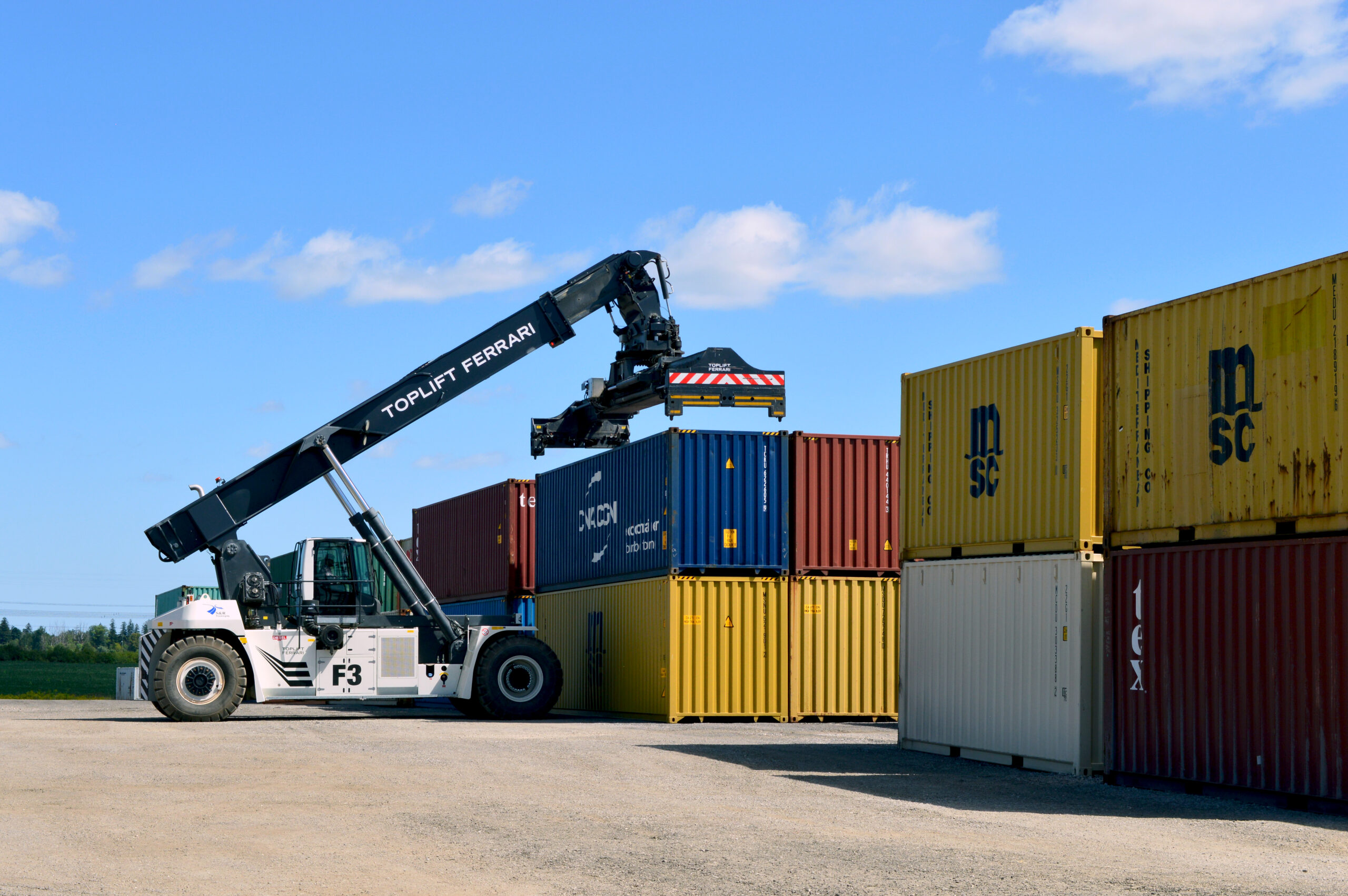
For that freight, the critical link is the inland leg: picking up the container from the rail terminal before free time runs out, and delivering it to the warehouse on schedule. S&R provides drayage serving CN Brampton and CP Vaughan rail terminals, and our
drayage services are built for exactly that pickup. For longer inland moves, our
container transportation team plans the route from terminal to door.
Who Handles a Border Delay or Shipment Change?
Before pickup, agree who will check the shipment’s status with the carrier and broker. A carrier’s manifest filing and the importer’s customs release are different parts of the process; ask what has been accepted and what still needs attention instead of treating a single status update as guaranteed clearance.
Keep dispatch and the broker connected
Give both parties a contact who can answer questions about the goods or paperwork. If a hold occurs, establish whether the next action belongs to the carrier, broker or importer. Avoid making a delivery promise until the responsible party has confirmed the updated position.
Report changes before the truck moves
Tell the carrier and broker promptly if the freight description, quantity, pickup details, destination or timing changes. Ask the carrier to coordinate any vehicle, driver or crossing changes that affect its submission. The responsible filer should decide whether an amendment is required.
Update the receiver
If processing takes longer than planned, dispatch and the receiver should agree whether the delivery appointment needs to move. Confirm the revised arrival window and any relevant waiting-time arrangements rather than assuming the original slot remains available.
How S&R Supports Your Freight
S&R Trucking Inc is based in Kleinburg, Ontario. Our team provides an in-house fleet and 24/7 dispatch support. Our full truckload service covers lanes across Ontario, the rest of Canada, and cross-border into the United States.
We will share our credentials when you ask, give you one point of contact, and plan each freight lane around real timing rather than best-case promises.
Planning a cross-border or intermodal shipment? Call S&R Trucking at 905-951-2951 or reach us through our
contact page to request a quote.
Before You Release the Load
- Check applicable carrier credentials and insurance for the planned movement.
- Provide matching freight details to the carrier and customs broker.
- Confirm who handles carrier filings and who handles customs release.
- For covered Canadian highway imports, allow for the CBSA’s one-hour advance-data requirement and applicable exceptions.
- Agree how changes, holds and receiver appointments will be communicated.
Frequently Asked Questions
What documents do I need for cross-border freight from Canada to the U.S.?
The carrier files the eManifest with U.S. Customs and Border Protection, and the importer or its customs broker handles the entry. You will typically supply a commercial invoice and any permits your goods require. Your broker can confirm the exact list for your products.
How far ahead must a carrier send an eManifest to the CBSA?
For covered highway shipments, cargo and conveyance data must be received and validated by the CBSA at least one hour before arrival at the first Canadian port of arrival. The CBSA lists exemptions and exceptions for specific movements. Missing that deadline or sending incomplete data can lead to delays and monetary penalties.
Who handles customs release?
The importer or its customs broker arranges the applicable release requirements, while the carrier handles its required cargo and conveyance submissions. Confirm the responsible contacts before pickup and ask your broker which documents your shipment needs.
What if my shipment details change after I send the paperwork?
Notify the carrier and customs broker promptly. Give them the corrected details and ask the responsible filer whether its submission needs updating. Also confirm any effect on pickup, the planned crossing or the delivery appointment.
S&R Trucking TeamSince 1992, S&R Trucking has been one of Ontario's leading intermodal carriers, combining FTL, LTL, drayage, flatbed and secure storage with 24/7 dispatch across Canada and North America.
Ready to Move Your Freight?
Talk to a real dispatcher today and get a free, no-obligation quote for your next shipment.
REQUEST A FREE QUOTES&R Trucking TeamSince 1992, S&R Trucking has been one of Ontario's leading intermodal carriers, combining FTL, LTL, drayage, flatbed and secure storage with 24/7 dispatch across Canada and North America.
Ready to Move Your Freight?
Talk to a real dispatcher today and get a free, no-obligation quote for your next shipment.
REQUEST A FREE QUOTE
 November 23, 2026 - By : S&R Trucking Team

Leave a comment